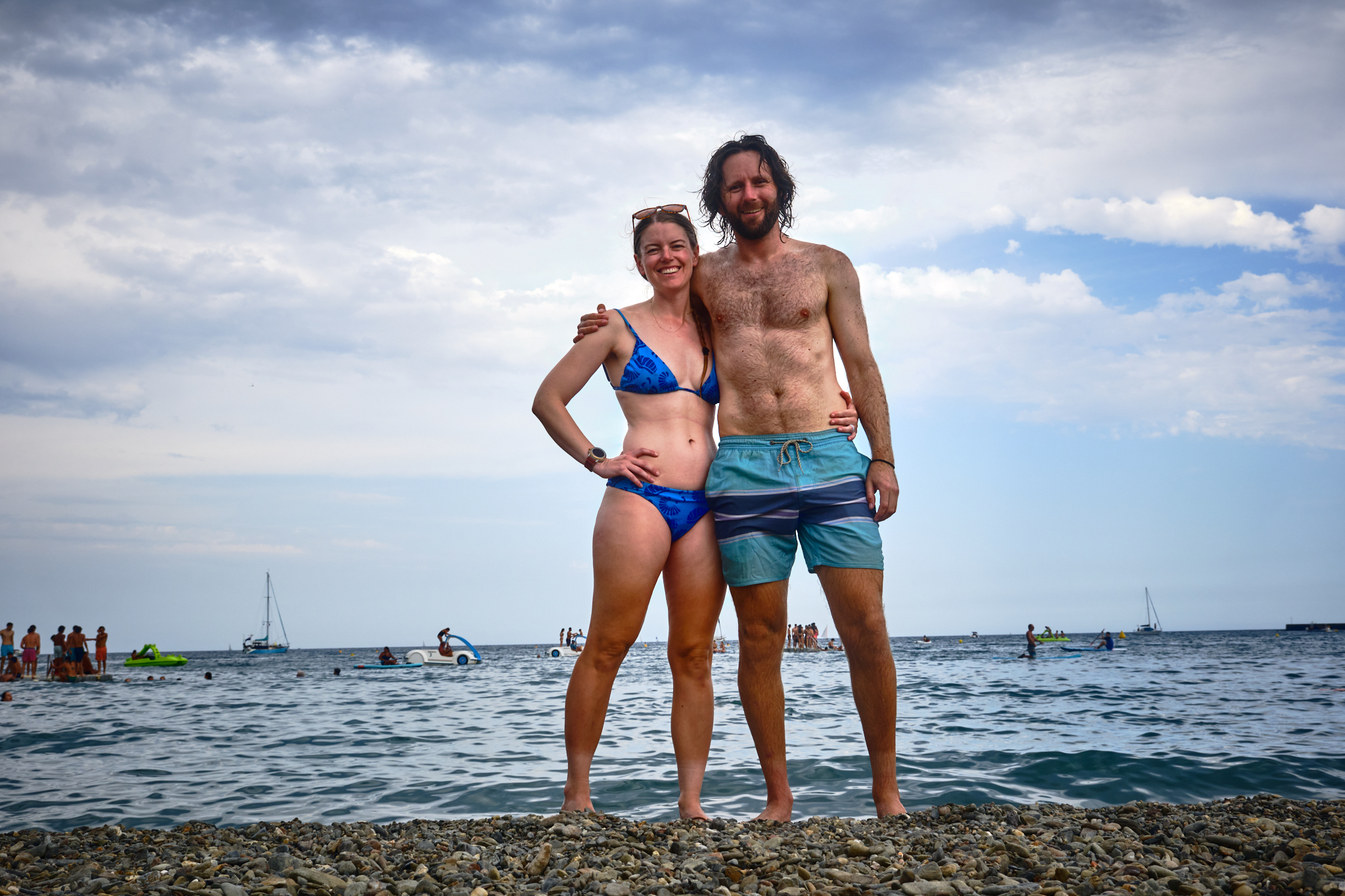
 This was a bit later than I intended, but I still wanted to post my summary of the HRP. I wrote all of this before hiking in the Dolomites, but I didn’t have long enough in front of a computer to post this before we left.
We did it, in our own way. We didn’t walk the entire trail, heck we technically didn’t walk all of the PCT either, but we saw enough. Plenty. I have a ton of thoughts about this hike, most of them born out of comparing the HRP to hiking long distance trails in the United States.
Let’s do this part first, since it’s applicable to most people: I wouldn’t recommend people do the entire HRP. I think 2 weeks is plenty. My favorite section was from Lescun to Gavarnie. If you want to hike for 2 weeks, start at Lescun and head east for 2 weeks. I do not think you need to hike anything before Lescun (Day 8) or after L’Hospitalet-près-l’Andorre (Day 36). I think within this section are the best views on trail. I think 2 weeks is enough because the trails are fairly rough-going and after about 2 weeks, the beauty of the surroundings normalize as the ardor of the trail continues to wear on you. This is a nice way of saying, shit starts to suck after 2 weeks.
Problems with the HRP
Lack of an app to centralize information
There is not a single application or resource people use when hiking the HRP. There are at least 3 different, popular guides (Cicerone, Pocket Guide, French one), all with slightly different information. People share information about the trail on personal blogs, Facebook groups, or verbally. It’s 2026 and there isn’t something like a FarOut guide for the HRP, which essentially functions as a forum on top of a shared map. I don’t know why this doesn’t exist yet, and it’s very frustrating if you know how much easier life could be with a common forum where people share information about the trail and everything else that might be included on Facebook (When should I go? What should I pack?) is excluded. It’s frustrating having outdated information about towns, trail conditions, water sources, etc. This is something that would so easily be fixed with an app, provided people actually use it. I was constantly frustrated by the lack of this type of app and swore up and down I would make one after the trail. Maybe I will, but I need to finish the hiking season first. I’d love to make one if only to take down the crappy incumbents that exist today. Their work is valuable, but stagnant. They’re snapshots of when they were published and the prerogative of one person, rather than the collective wisdom of years of hikers. People make the same mistakes over and over again because the lessons and advice are buried in a Facebook group, at best. Someone needs to fix this. Maybe it will be me.
You cannot swim in most lakes
I am sure there are legitimate, ecological reasons for this, but not being allowed to swim in almost all of the alpine lakes is a big bummer and something I wish I knew ahead of time. Many explicitly prohibit swimming with signs and when they do not, you get the impression it is still not done, culturally as no one else ever seems to be swimming, really. Except in rivers. People do swim in the rivers. However, most of the rivers are closer in size to creeks and swimming in them is difficult. For me, swimming in lakes in the summer is a core part of backpacking in the mountains. I don’t need a campfire or even a hot beverage in the morning, but I do want to be able to swim.
I do not think this is unique to the HRP. It seems like it may be common to prohibit swimming in lakes along many hikes in Europe. I have heard this is the case on the Tour du Mont Blanc, however the sheer number of people hiking that trail makes this policy much more understandable in that context. If that turns out to be the case, perhaps I vastly overestimated Europe as a great backpacking destination.
Poop
There is animal poop in most places, as cows, horses, and sheep graze all over the Pyrenees, but largely this is tolerable. However, there is also a surprising amount of toilet paper floating on and around the HRP from past hikers. The terrain of the Pyrenees is such that digging a cat hole for poop is almost impossible. The soil is nearly impenetrable with rocks and roots that make it difficult to penetrate even the smallest distance below the surface, let alone 6". Without a way to properly bury their waste, many people leave behind their toilet paper on the surface, which dries out and blows around. Not to mention, the bleached white color of toilet paper is visible from quite a distance in the green, brown, and grey landscape of the Pyrenees. I think there are 2 solutions to this problem of growing toilet paper tumbleweeds:
- Education/policy change: Ask people to pack out their toilet paper. Some places in the U.S. have already started asking hikers to pack out their toilet paper, even if you can bury it. This is reserved for higher impact and high alpine areas where decomposition cannot keep up with the amount of human visitors. In the Pyrenees, this type of change can help with the amount of toilet paper, but doesn’t actually do anything about the amount of human waste that is on the surface. For that, we need the second solution.
- Install and maintain outhouses: There are many staffed huts along the HRP that already have toilets in them. Some of these huts are accessible via road, and others get their supplies via Helicopter drops. There is already some precedent for cleaning out toilets along the HRP, but if there were more than the number of huts, people would not need to poop outside.
Advantages of the HRP
There are no mosquitoes
There might be some, but there are virtually none. Maybe the heatwave killed them off, but I didn’t need any sort of bug repellant or head net the entire trail. This was surprising to me. We also saw very few ticks.
Apparently the Pyrenees currently have 74 bears. We didn’t see a single one. If bears scare you, this is another pro of the HRP.
The People
Fellow HRP hikers are fairly experienced hikers and also fairly international. This allows you an opportunity to meet people from all over and learn from others.
I wish this list was longer, but I’m struggling to come up with more things that are both advantages and unique to the HRP. The scenery is generally very nice, but the weather we had was historically hot and awful.
Things We Learned Along the Way
- For us, planning days by time was more useful than any distance metric. Often the trail would be trash and you’d move much more slowly, so elevation gain or loss alone was not a good predictor. The guidebook time estimates proved to be very valuable for estimating the number of days between resupply towns.
- The HRP is not very remote. I only say this because our guidebook mentioned how wild, remote, and unpopulated much of the trail would be. It is not at all unpopulated, at least by U.S. standards. Apparently, it is quite uncrowded by European standards, as most people compare the Pyrenees to the Alps where there are more frequent huts and cable cars and therefore more people. We could almost always see someone else from the trail. I didn’t really mind this that much, but I only mention it because I would say this is something the guidebooks get very wrong.
- We learned a lot about doing resupplies (v., as in, to get more supplies) in France and Spain that differed from our experience in the U.S.
- Campgrounds are the economical resupply points. These are what we would call car campgrounds in the U.S. where people with cars drive in and pitch tents, or people with vans/RVs park on grass. They charge per person, and per tent. Expect to pay about €20-30/night for 2 people to stay at a campground: ~7€/person and ~10€/tent. They often have showers and laundry facilities. You will need to bring soap for the showers, but they will often sell soap for the laundry. Once we learned this, we bought a bar of soap at a supermarket and carried it while hiking since many campgrounds were far from supermarkets. The campgrounds often do not have hand soap or toilet paper in the bathrooms, though they do have flush toilets. Don’t expect towels, either for rent or otherwise. You can often find outlets in the bathrooms to charge electronics. A-la-carte showers and laundry were not readily available, at least as far as we could tell, so plan on spending a night in town.
- Hotels in towns charge per person, rather than per room. This was quite unusual to us, as the U.S. charges per room. You can make an argument for either system, I suppose. A room for individuals usually costs about 2/3 the price as a room for a couple.
- In town, you can ask to charge electronics at a cafe/restaurant, but you will need to at least purchase a drink to not be considered rude. There are no hiker handouts.
- The average French fry at restaurants along the trail are much better than those in the U.S.
- By and large, most of the food at the restaurants along the HRP are just as mediocre as those along the PCT. France and Spain have better foods, just don’t expect it here.
Logistics
We bussed to Hendaye from Grenoble. We reserved a hotel in Banyuls-sur-Mer, La Casa Dina, which agreed to hold a box for us. We mailed a box from Grenoble to the hotel. It was a large box, weighing 17kg and cost ~40€ to mail. It arrived in 2 days. Domestic shipping is relatively cheap so if you want/need to do this, I would wait to mail your stuff until you are in France. We paid extra for a refundable reservation and reserved something like a 10-16 day stay. When we were on trail, just before our refund window closed, we modified the reservation to be for 2 days, when we knew when we’d finish and how long we thought we might want to stay. They were completely booked out otherwise and I’m glad Zoë thought to do this, otherwise we wouldn’t have had a place to stay at the end. The French Mediterranean in August is packed!
The towns we stopped at along the way and how I would rate their stores for resupplies are as follows:
- Aldudes: crap. Small store, but you’ll make it work.
- Lescun: mediocre. Small store, not cheap.
- Gavarnie: mediocre. Small store, surprising given how much else is here.
- Bielsa (hitched from Parzan): good. Decent sized store, good prices. I don’t know if it’s worth the hassle skipping Parzan, but we zeroed in Bielsa. I wouldn’t recommend it.
- Benasque: decent. Multiple stores, prices mixed.
- Vielha (hitched/bus from Salardu): awesome. Best resupply on trail. Great supermarket, great prices. Also staying a night in Vielha was a highlight for us.
- La Massana (bus from Arinsal): good. Good sized stores, with good prices. We stayed a few nights in La Massana because Zoë was sick. It seems Arinsal might have better accommodation, but isn’t walking distance from shops and restaurants.
- Bolquere: great. There’s an Intermarché with great selection and prices.
That’s all we did before we left the trail. In summary, I’d say a resupply was good if there was a supermarket in town. Everything else, for me, was a step below. When the selections were super small, I’d say it was at least two steps below. If food is important to you, you might consider taking public transit to bigger towns to get food. Otherwise, you can suffer like the rest of us.
For the end, we took a bus from Bolquere to Perpignon and from Perpignon we took the train to Banyuls-sur-Mer.
Gear
Let’s talk about everyone’s favorite thing and one of my least favorite things: hiking gear. Gear is just a tool, and nowadays it feels like they are tools that wear out faster than ever before. How do I know this? I don’t, but it seems like ultralight might be a clever ruse to get us to pay more money for products that break faster.
When I tracked the costs of our month long AT hike, I was surprised to find that gear replacements accounted for basically half the cost. I don’t think 1 month was enough time to properly amortize all of those costs, but I wouldn’t be surprised if the cost, over time, ended up being close to 1/3 for gear, for us.
I had several unexpected gear failures happen on the HRP and some expected. The expected “failures” are things wearing out. For example, we each went through a pair of shoes, which we expected. While I expected my shoes to last the full trail (~500 miles), to anyone hiking I would recommend replacing your trail runners, if you are wearing them, at or before L’Hospitalet-près-l’Andorre (~400 miles). The terrain was brutal on our shoes and our slower-than-average speed meant we probably spent the same number of hours hiking in those shoes that we would have hiking an additional 100 miles on another trail.
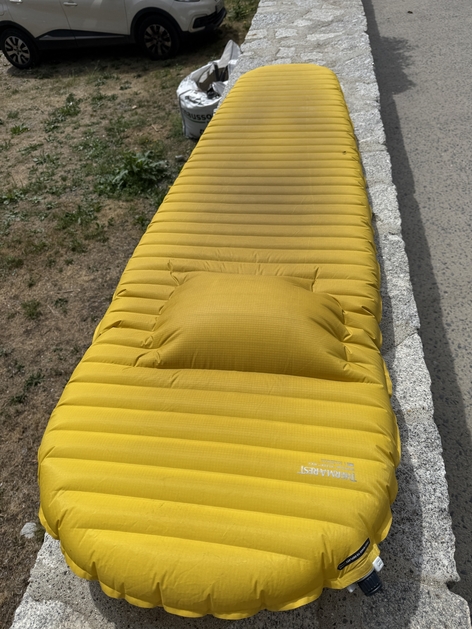 My sleeping pad’s, Therm-a-rest NeoAir Xlite NXT (what a shitty, needlessly long product name, ~$230 in the U.S.) baffles came undone a little more than halfway through the hike. This was unexpected as I’ve never had this happen before. We have had our fair share of punctures so we carry a patch kit. I was not prepared for a giant bubble to form where my upper back rested. Fortunately, we crossed a town that had an excellent outfitter and I made the difficult choice to replace the technically-still-functional pad for $300. The only way I could justify it in my head was by dividing the cost by the number of days left in the year I knew I’d be backpacking and sleeping on it. Only when I realized that was about $6/day did I feel better about buying a new pad. I contacted Therm-a-rest, even though I had made the decision to buy a new pad and throw the other one away. They were kind enough to send me a replacement pad, free of charge. I guess I’ll have a new one waiting for me when we get home.
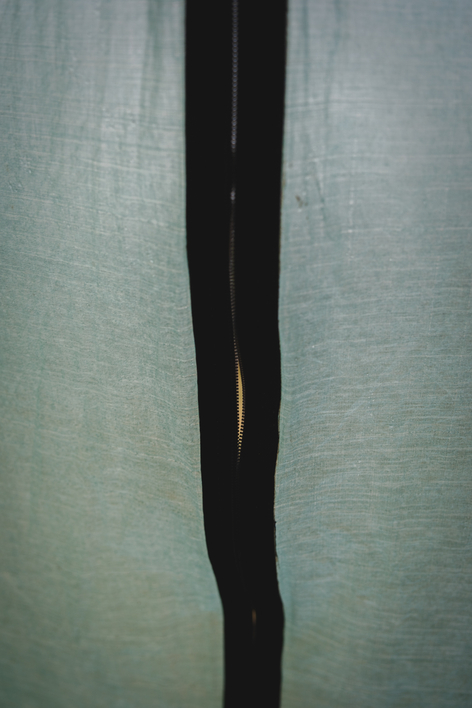 I have a love-hate relationship with our tent, a Durston X-Mid Pro 2. It’s stupid expensive (~$920), but stupid light. It’s also extremely fragile. The creator, Dan Durston, frequently visits backpacking forums to offer advice, explain why his tent is the best anyone could make given his constraints, and how the failure of a Durston tent is likely due to some error on your part. He is extremely proactive, is generally known for decent customer service, and his involvement in forums shows his commitment to the community and the products he makes for them. All that to say, if Dan saw what I’m about to say, I’m sure he’d say it’s my fault. Zoë recently saw a discussion on Reddit, where Dan essentially explained that this tent should last about 1 thru-hike. I bought this before the PCT, as an upgrade to the much more affordable, Durston X-Mid 2, but had I known it was only “expected” to last for the PCT, I would not have purchased it. At this point I have replaced all of the zippers on the tent (all 6) and one of the replacement zippers (YKK, “OMG aren’t they the the best?!” No.) is already starting to fail. I don’t mind the small pinholes that have started to develop in the
overpriced plastic DCF, but the zipper failures are quite stressful to deal with. On this hike I replaced some of the zippers that I thought I had fixed by cleaning them, but as soon as we got back in the field, failed to close. We also had problems with one of the replacement zippers. At this point, I’m out of replacement zippers and I’m sure acquiring more, without a stable shipping address, will be very difficult. So I’m hoping we don’t get too much bad weather for the rest of the season.
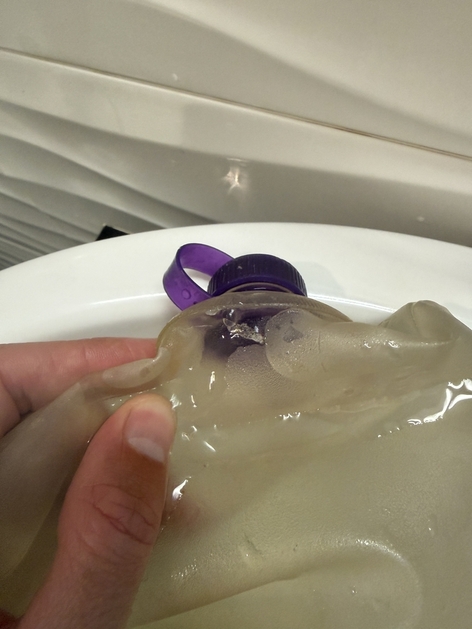 My CNOC water bladder (~$25), purchased last year 2 weeks into the PCT, also failed on this trip. It was still usable as a leaky water bladder around camp, but I could not use it to carry water. Thankfully it made it through the initial, dry portion of the trail and we ended up not doing the driest part of the HRP: the last couple of days. I emailed the company and they’ve sent me a replacement, to the U.S.
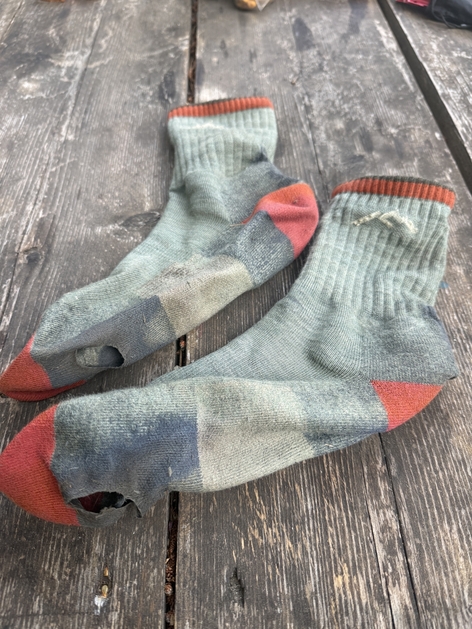 I wore holes in my Darn Tough socks (~$26). This is to be somewhat expected, but I believe these have less than a year of use. I have an email into their warranty program and I expect they’ll replace them.
My Outdoor Research sun gloves (~$35) are nearing the end of their life after 2 months of use. This is somewhat expected at this point, as I can no longer expect sun gloves to last much more than 2 months. It is sad their lifespan is this short.
I’m going to continue wearing my Patagonia sun hoodie (~$70) and trailfairer shorts (~$70), even though they’re stained and sun bleached respectively. They don’t come clean in the wash anymore. I’ll probably have to replace them at the end of this season. Zoë snagged her same shorts on a rock and tore a hole in them. She sewed it on trail but it too will get replaced at the end of the season. I’ve had the shorts for almost a year, which is quite a good run. The sun hoodie I purchased earlier this year so it has about 2.5 months of continuous use. A bucket of Oxy Clean might get out some of the stains, but we’re far from having any of that or a bucket to soak it in.
You know what has worked surprisingly well? A hat I got from a trail race. Somehow that has lasted longer than anything and despite it being mostly white, doesn’t look absolutely disgusting. Props to Mammoth Trail Fest and their Fractel hats.
My single pair of Saxx underwear did well on this hike, although they were like-new. Still though, to hold up to 30+ days of continuous chafing from these thighs is respectable.
Our backpacks are both showing more signs of wear. Zoë’s, having done all of our travel since early 2025 through now, has acquired several rips and tears. It’s actually pretty impressive it’s lasted this long. My pack, a replacement for a 6 year old one I had, has been in use for a little over a year at this point. It certainly doesn’t look brand new and I doubt it will last as long as Zoë’s has.
My quilt got snagged in a tent zipper very early in our hike and ripped a sizable hole in the fabric, exposing the down interior. I threw another piece of duct tape on it and it seems to be holding. I was temporarily devastated, but this quilt has been with me for probably 8 years at this point. I should give it some credit. It has 1 other piece of duct tape on it that I recently replaced, but the last piece lasted years, I think.
Wrapping Up
For us, the HRP was instructive. We didn’t learn much more about backpacking, but we did learn a lot more about our preferences with respect to backpacking trips. Specifically, “doing the good parts” appeals to me more than completing a full trail someone else has laid out, even if I have time to do all of it. I learned that while we can do hard trails, they get older, faster than easier ones. And, of course, we learned a lot about how camping works in France and Spain. I knew this before the PCT, but I really hate the heat. There’s really no avoiding it if you do a PCT through-hike, regardless of which direction you go, unless you flop around quite a bit. I didn’t expect the levels of heat and constant sun exposure we got on the HRP, and that made it extra challenging too. All that being said, I still think a 2 week or less section hike starting around Lescun and heading east is worthwhile.