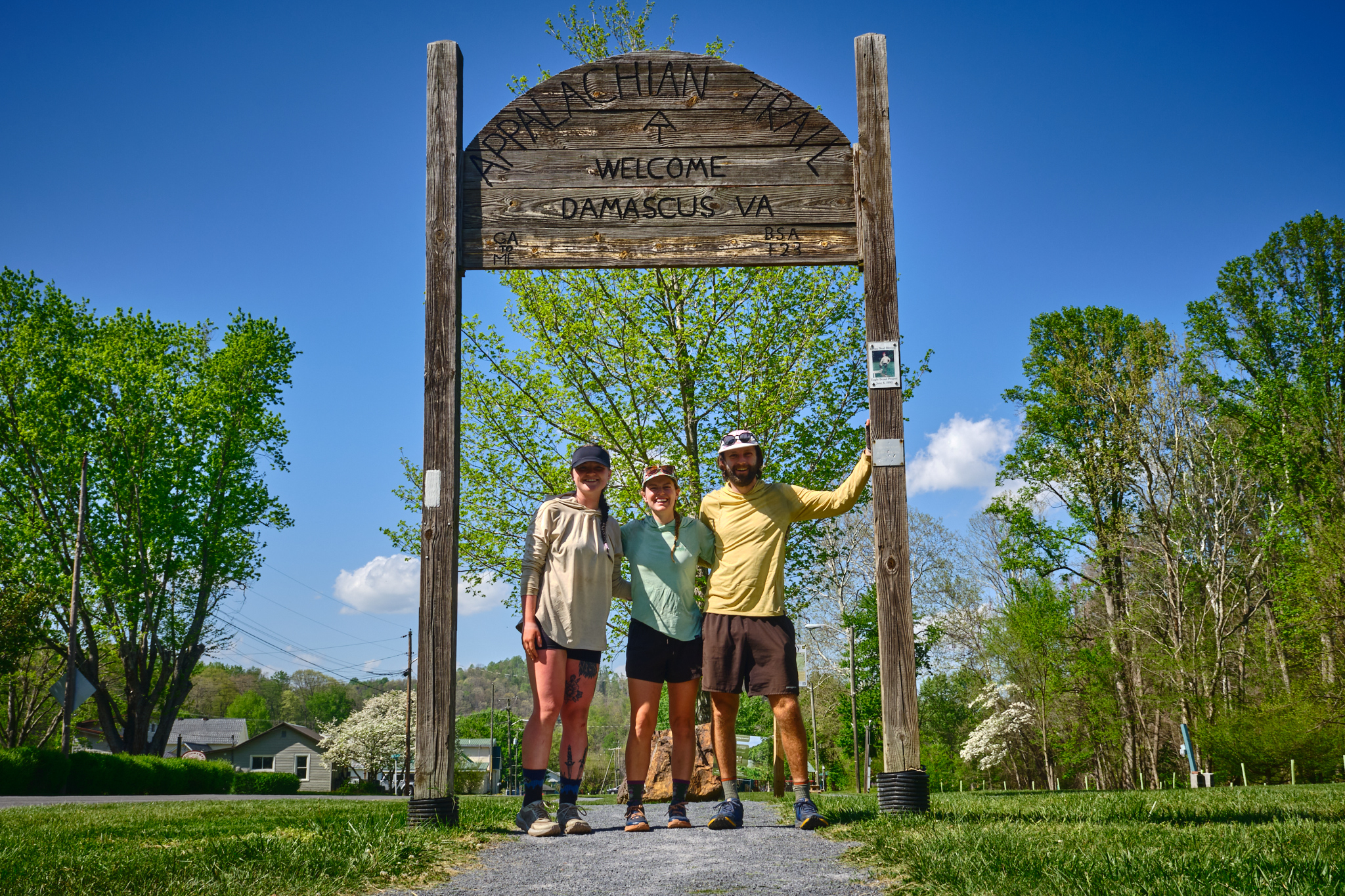
How it Went
Since I did not take diligent notes throughout our trip about how things went, I decided to ask Zoe what she thought. What follows is what she said about our month on the AT. I then heavily edited it, so you know, for everything bad blame me, everything good, credit her.
Socially
It was great. It met expectations, which is a good thing. We had a more social hiking experience, which was one of our goals. On the PCT, we ended up very socially isolated and that made things all the more difficult. We learned what a thru hike of the AT would be like, if we wanted to do that. One thing that was good that we didn’t plan on, was trying out different styles of hiking. On the 3rd day for example, we did 9 miles and then just hung out. Overall we got to try out a more relaxed style of hiking, where we weren’t only concerned with a time goal. On the PCT on the other hand, we were constantly measuring things against the October 1 “deadline” to get to Kennedy Meadows South.
What did we learn? We have no chill, so we out-walked a lot of people. Going in, we knew we were going to be more fit, hiking-wise, than a lot of our peers, but we didn’t want that to define our time on the AT. We were not trying to pretend to be unfit or more tired than we were, but we thought we would have more relaxed days than we were used to, since we did not really have a mileage goal. Although, having “Damascus, 490 miles = completing two states” in the back of our minds probably didn’t help. Anyway, we thought we would be more chill people by hanging with the same folks, creating memories, and developing friendships. However, we might have been a little unrealistic with ourselves. We couldn’t really wrap our minds around stopping before 2pm. I think most people took more breaks so we could have tried taking more of those. We weren’t the earliest starters in the mornings but we might have been some of the later finishers. The net result though, of us walking even for 7 hours per day was, we didn’t see the same people again with the exception of Atlas and Rolodex, so we didn’t get to make as many memories with other people as we had hoped. I’m not sure everyone else was on the same schedule, but I know no one else was on our schedule. So perhaps even if we had slowed down, we might have still ended up between groups of people. In other words, it seemed like everyone else was sticking together or closer together but maybe they were also only meeting new people each day.
We didn’t know how many miles people would do each day, we had a lot of fitness from our hike last year, and we had nothing else to do aside from walking (kindle, deck of cards, etc.). Put all this together and maybe it’s easier to see why we out-walked our potential friends.
Gear Considerations
We also ideally would have done more responsible food storage. We would have felt better with some sort of bear resistant storage because we felt like shitbags a lot of the time. This really was due to us being cheap and the logistics not working out. We have bear bags, but when we left Seattle last December, we didn’t know we would need them so we left them in storage. They’re also around $125 a piece so it wasn’t something we wanted to buy 2 more of for a month, when they technically weren’t required, just recommended. However being some of the only people at camp not taking food precautions for bears did make us feel bad. Many times there were lockers or bear lines to hang food bags, but several times there were not, and we just slept with our food those nights inside Nylofume pack liners.
It was colder than we expected, but we did no planning. (I did some). Zoe could have looked more at the weather and she might have brought her wool base layer. We weren’t expecting it to snow the first night. I used my puffy to stay out of the tent longer and socialize. I wore it for a few weeks in the Sierra only on the PCT. If we had started a week earlier, we would have had a VERY different experience. There were several days of fairly heavy rain in the week preceding our start.
If we were to thru hike the AT, our 20 degree bags would be a little hot. It seems like the kind of hike where 40 degree bags might be useful. We had cold nights but also some quite warm nights considering how early it was, i.e. mid April at the end. We didn’t do any “gear swapping” on the PCT, but it seems common or at least commonly discussed on the AT.
Neither of us got a tick bite. I think it was because it was too early in the season. We have no idea if the InsectShield treatment worked, and maybe you could argue we didn’t need it because they weren’t out, but we don’t regret treating our clothes.
We spent less money on the AT. We didn’t make any material changes for our gear for the AT, and if we did it again, we wouldn’t make any material changes either, except maybe get lighter sleeping bags for the hotter months.
Sticks in the Mud (Failures to Adapt)
The fact that we pre-planned our food, went well overall. We have things pretty dialed for hiking in the U.S. in terms of how much we want to eat and how to get it to us. It’s worth noting, except for the last night, we didn’t stay in any of the hostels, so we didn’t get the experience a lot of people have, which Zoe doesn’t think was a con, but if we went back, we would take a zero in the first 30 days and we would stay in a hostel to check out the vibes. We are definitely mail our food people.
We struggled a bit with the fact that the AT is set up for people to stay in hostels as opposed to offering a standalone shower and laundry for purchase, which is what we got used to on the PCT. It seemed like the more north we went, the easier this became, but in Georgia this was really hard to find and it seemed like we were the only people who were not interested in spending the night in a hostel or hotel in order to get a shower.
Closing Thoughts (Stuff I Could Not Otherwise Logically Group Together)
To us, it seems like there’s a significant difference between people starting SOBO on the PCT and people starting NOBO on the AT, in terms of fitness and hiking experience. Broadly, the folks we met on the PCT were younger and more experienced. The AT had a significantly larger older contingent, at least 20% were over 50 years old and we talked with many folks who were backpacking for the first time. I would not let this deter you from either trail though. Plenty of people in every age bracket and every experience level hike both trails. The AT felt a lot more accessible and beginner friendly for most backpacking components. The elevation gain was harder, but everything else was easier.
We didn’t see any wildlife, really. People always ask us that.
The trail magic was on fire. We loved being NOBOs for the trail magic.
What I Would Change
- Mail all the food boxes ahead of time. Since we were not sure if we would make it the full month, we did not want to send boxes to places we might never have reached. In hindsight, there’s always “return to sender.” We should have packed and mailed everything at the start, rather than relying on someone else. This would have been easier for everyone.
- Consider longer stretches between town. Initially I did not want to do anything longer than a 5 day food carry. My memory from the PCT was that 6 day food carries were brutal. In hindsight, going into town often is more brutal: it’s costly and wastes a lot of time. I wish we had done more 5-6 day food carries. Doing town stops more often than that was unnecessary for us.
- Try ramping mileage more slowly. I still ended up with heel/Plantar fasciitis pain by the end. I changed shoes before this hike to give my feet more room but I think capping our mileage/time to 15 miles/7 hours per day for the first few weeks might be worth a shot. I kind of think I’ll have pain no matter what though.
- Reduce my food down to 3,500 calories per day, at least initially. I almost never ate 4,000 calories in a day during this month, which is what I anticipated and packed. We were not hiking enough hours to necessitate that many calories, for me, and I just ended up throwing my extra food away. Sad.
Cost
I always wondered what it would cost us to through hike and if you’re wondering, this next section is for you. This time I decided to do the work and categorize all the expenses for our 30 days on the AT. When we did the PCT last year, I think the low end from past hikers was around $5,000/person and $10,000 was more typical. I am not positive what we spent there, so I paid more attention this time around. Our costs by category were:
- Transportation: $85 (on-trail only)
- Gear: $914 (pre and mid hike replacements)
- Food: $941 (includes shipping and pickup costs)
- Accommodation: $136 (permits, showers, laundry, hostels)
Total: $2,076 (2 people, 1 month)
Transportation
I ignored the costs of getting to and from the start and end of the trail since that is very situation specific: if you live nearer to the start or finish, your costs will be lower than someone who is traveling from much further away. We flew to Atlanta from Detroit ($130) and we rented a car from the Damascus area to drive back ($130, excluding fuel). Those costs were not included. I did however include the cost of our Uber from REI to Amicalola since I figured most people would be paying some amount of money to get to the start of the trail, once they got to Atlanta. The exception is the people who live within driving distance of the trail start. We took an Uber for $85.
The PCT and AT culture is quite different in terms of transportation around trail. The PCT encourages quite a bit of hitchhiking and paying for rides when you need to go far out of the way. The AT encourages shuttling to and from the hostel you have reserved in town, and if you’re not staying at a hostel, paying for a ride service to take you where you need to go. We mostly avoided this by walking into towns. In the two cases we didn’t, we hitchhiked or took a free shuttle. We only stayed in an accommodation our last night, in Damascus, so hostel shuttles were not freely available to us.
$85 total transportation costs
Gear
This actually surprised me quite a bit. Gear is expensive, even if you own nearly everything already. We were mostly replacing things that had worn out from the past year of use. If you had told me half the cost was going to go to gear, I would not have believed you. One thing we did learn though quite early on in this long distance hiking thing is: everything wears out, it is just a matter of time. Now when I hear someone say they’ve owned a piece of gear for 6+ years, I assume they do not use it very often. When we started the PCT, half of my gear was 6 years old and I ended up replacing all of that within the first month.
Replacement items included: a fast charging AC adapter, cook towel, sunscreen, Permethrin, exercise band, 2 pairs of shoes, replacement tent stakes, body glide, ear plugs, a new sun shirt, InReach subscription, a replacement sleeping pad, and InsectShield treatment for clothes for a total of $835.
On trail, I ended up purchasing a 1 pair of socks and 1 pair of sun gloves because we mailed the box with sun gloves to the wrong location, for a total of $79. I didn’t end up using the spare pair of socks. The extra sun gloves we’ll carry forward to our next trip. Sun gloves seem to have a maximum life of about 2 months of daily use before they start ripping, or you know, 10 years of “normal” use.
$835 + $79 = $914 total gear costs
Food
- Food purchased ahead of time: $597 (Costco, Walmart, Amazon)
- Mailing costs1 (7 boxes): $16.36 + $16.61 + $17.05 + $14.06 + $17.54 + $19.58 + $9.57 = $110.76. One of these was a mistake when we mailed a box to Franklin, Georgia instead of Franklin, Tennessee. That box we chose to return to sender and re-ship it to a different city. Since we do not mail packages via priority, forwarding the package onward was not an option.
- Food costs on trail: $233
$597 + $111 + $233 = $941 total food costs, or around $16/person/day.
Accommodation
Showers/Laundry/Accommodation/Permits: $136
The majority of this was made up by 2, $40 Smokies permits. We spent $20 on accommodation our last night. The remaining $36 covered our shower and laundry costs for the month.
Detailed Costs by City
If you do research about how much it costs to do a through hike, you’ll essentially find out: it depends. This can make it difficult to determine a budget ahead of time. However, pretty much everyone agrees, the way to save money on trail is to spend less in town. Typically the way people do that is by spending less time in town. Less time in town means less spent on meals and accommodation, and over the course of a through hike, those costs can really add up. Below I noted how much we spent at each stop along the way. I would consider these costs to be pretty much a lower limit of what you can expect to spend. With the exception of Damascus, we did not stay overnight in any of the cities, which is fairly unusual. If you do spend a night, expect to spend at least another $30/person on accommodation and another $15/person on at least 1 more meal.
- Atlanta: $103 (Uber to trail, food from Target, fuel from REI)
- Neel Gap: $35 (Gatorade, cheese, 1 pair of darn tough socks)
- Hiawassee: $5 (cheese)
- Franklin: $115 ($40 Dollar General resupply, $30 Ingles resupply, $45 outfitter for sun gloves and fuel)
- Fontana: $106 ($20 resupply, $6 laundry, $80 Smokies permits x2)
- Hot Springs: $60 ($15 shower x2 + laundry, $36 food at diner, $9 for snacks/drinks)
- Erwin: $26 ($5 package pickup, $5 Slushies, $16 Dollar General resupply top up)
- Hampton: $27 ($15 for shower x2 + laundry, $12 Dollar General resupply top up)
- Damascus: $56 ($20 hostel, $36 meal)
Total in-town expenses: $533
These costs were already accounted for in the sections above, but this is a chronological breakdown that allows you to see how much it costs to go into town.
Caveats
I should mention that while I hope this information is useful to someone, it is not likely very typical of most through hikers. These costs, maybe gear aside, are very low for 2026. We spent a month on the AT, did about 500 miles (~25%), but the costs likely would not scale 4x to mean 2 people could finish the trail for $8,000, or about $4,000/person. You could, but you would take no zeros, not spend anything on accommodation or shuttles, and need to spend $16 or less per person, per day, on food while hiking. Said differently, we did some unsustainable stuff because we knew we would be finishing in a month. It is relatively easy to not take any zeros if you’re “only” going out for 30 days. Is it sustainable? Not for me.
If you are mailing food boxes, the only thing you should be using is USPS Click-N-Ship. Flat rate boxes are a rip off, unless you need to forward packages. I’ll save you the time and tell you to minimize your Click-N-Ship costs: mail from nearby (within a few states) and keep your box sizes as small as you can. You will pay more to ship a larger box than a heavier one, so don’t worry about weight, focus on size. ↩︎